 |
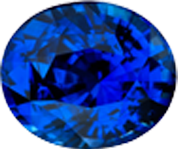
Sapphire
Sapphire is a variety of the mineral corundum. Normally thought of as the blue gem, sapphire comes in almost every color. And sometimes a sapphire can have multiple distinct colors, referred to as “parti colored” sapphires. When it is blood red corundum is called Ruby- all other colors are called sapphire and designated by color, e.g. blue sapphire, pink sapphire, yellow sapphire etc. Colorless sapphire has been used as a diamond substitute. With hardness of 9 on the mohs scale, sapphire has excellent durability. Lear more about Sapphire, the September birthstone. |
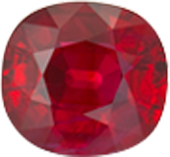 |
Ruby
One of the traditional precious stones, Ruby is the blood red variety of the mineral corundum. Other varieties of this mineral include sapphires of various colors. Ruby gets its color from chromium. Until corundum reaches the deep red color of ruby it is referred to as pink sapphire. It has a hardness of 9 on the mohs scale and has excellent durability. It is found in many places in the world including South East Asia, Africa, and Sri Lanka. Myanmar (formerly Burma) has produced some of the finest rubies ever found. Natural, unheated rubies of fine quality are extremely rare. Learn more about Ruby. |
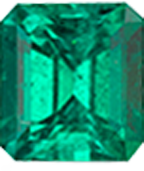 |
Emerald
Emerald is the vivid green variety of the mineral beryl, and one of the traditional precious gems. When the color is not intense it is simply called green beryl. Other colors such as yellow (aka heliodor) and pink (aka morganite) and blue (aka aquamarine) are also found and often occur in larger crystals with fewer inclusions. Emerald has a hardness of 7.5 on the mohs scale and is therefore less durable than ruby and sapphire. Learn more about Emerald, the May birthstone. |
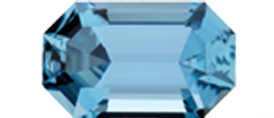 |
Aquamarine
The blue variety of the mineral beryl is known as Aquamarine, also referred to simply as Aqua. It usually occurs in light pastel blue to blue green color and can occur in large, clean crystals unlike the most famous variety of beryl; emerald. Aquamarine is routinely heat treated to permanently remove the green color leaving a more pure blue. With a hardness of 7.5 – 8 on the mohs scale, aquamarine has good durability and is suitable for pendants, earrings and occasional use rings. Learn more about the March birthstone, Aquamarine. |
 |
Jade
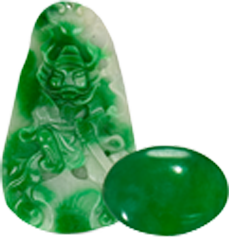
There are two distinct minerals referred to as Jade; nephrite and jadeite. The most prized is jadeite, also known as Burma jade. Jadeite comes in a wide variety of colors including green, lavender, yellow, black and white. The most highly prized jadeite is a semi-transparent emerald green color often referred to as “imperial”. While not particularly high on the mohs scale at 6.5-7, jadeite is extremely tough by virtue of its interlocking crystal structure making it a very durable gem. Jade is known as the “stone of heaven” in Chinese culture and the Chinese word for jade is one of the oldest in the written record dating back to 2950 BC! Learn more about Jade. |
 |
Topaz
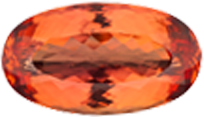
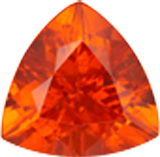
Topaz is usually thought of for its yellow and orangey colors but it also occurs in colorless, pink, pale blue, and other hues. The most prized coloration is an intense pinkish orange known as “imperial topaz”. Topaz in the orangey color range is often referred to as “precious topaz” to distinguish it from less expensive citrine and smoky quartz. Blue topaz is extremely popular as it has the appearance of aquamarine at a fraction of the cost. With a hardness of 8 on the mohs scale, topaz has good durability. Read more about the November birstone, Topaz. |
 |
Garnet
The garnet group consists of has several distinct varieties; almandine, andradite, grossular, pyrope, rhodolite, and spessartine. Though normally thought of as a deep red gemstone, garnets can occur in almost any color including emerald green! While dark red almandine and pyrope garnets are common and inexpensive, fine green grossular garnet (Tsavorite) is quite rare and expensive. With hardness on the mohs scale of 6.5-7.5 garnets have good durability. A garnet bead necklace was found in Egypt that is over 5000 years old! Learn more about Garnet, the birthstone for January. |
 |
Pearls
Pearls come in a wide variety of types, shapes, sizes and colors. They are an organic gem, created inside various species of mollusk (shellfish). They are cultivated in different waters around the world, both fresh and saltwater. There are inexpensive small freshwater pearls, moderately priced Akoya saltwater pearls, and expensive South Sea and Tahitian Black pearls. In addition to differences in colors, shapes and sizes, there are differences in luster and the subtle prismatic effects known as ‘orient’. Prices can vary from a few cents to many thousands of dollars for a single pearl. Learn more about Pearls, a birthstone for June. |
 |
Amethyst
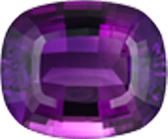
Amethyst is the purple variety of the mineral quartz. The beauty, availability and affordability of amethyst make it one of the most popular gemstones. It occurs in colors from vary from pale lilac to deep reddish purple. At 7 on the hardness scale amethyst has good durability. It was believed that amethyst could prevent intoxication. Amethystos means “not drunk” in ancient Greek. Leonardo Da Vinci wrote that amethyst quickens intelligence and rids one of evil thoughts. Learn more about Amethyst, the February birthstone. |
 |
Citrine
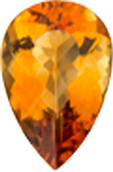
Citrine is the yellow variety of quartz, a family that also includes purple amethyst and rose quartz. Citrine looks like and is often mistaken for topaz. It occurs in colors from very pale yellow to deep brownish orange, and can sometimes have a greenish hue. Like amethyst, its good hardness (7 on the mohs scale) together with availability and affordability make it a very popular gemstone. Learn more about Citrine, the alternate birthstone for November. |
 |
Alexandrite
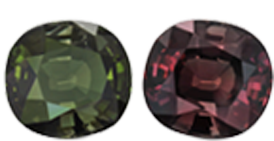
Alexandrite is the color-changing variety of the mineral chrysoberyl. Sometimes talked about as the gemstone that is “emerald by day and ruby by night” because of its almost magical property of changing color based upon the type of light it is viewed in. Fluorescent light will bring out the green hues, incandescent light will bring out the reddish hues. With a hardness of 8.5 Alexandrite has very good durability. Originally discovered in Russia and named for Czar Alexander II, it is now found in Brazil, Sri Lanka and East Africa. Most gem quality specimens on the market transition from reddish purple to a greenish blue or brown. Learn more about the remarkable gem Alexandrite, a birthstone for June. |
 |
Fancy Color Diamond
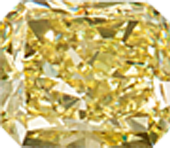
The world’s most highly valued gems are fancy color diamonds. Most gem diamonds occur in colorless or light yellow and brown colors. Rarely, trace elements and structural anomalies in the diamond cause it to have strong color. Only 1 in 10000 diamonds is a fancy color. When that color is attractive such as vivid yellow, deep blue, or intense pink they become phenomenally rare and expensive. The grading of fancy color diamonds is fundamentally different from those in the normal range. Learn more about Fancy Color Diamonds. |
 |
Ametrine
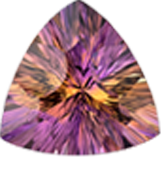
Ametrine is purple and yellow bi-colored quartz. It is amethyst and citrine in the same gem. Only one commercial source of natural ametrine exists located in eastern Bolivia. The best gems have equal amounts of purple and yellow with good saturation. Ametrine is often cut into step cuts to showcase the bi-color effect, but the material is also a favorite of gem artisans using advanced cutting techniques to capture the two colors in creative ways. They are sometimes referred to as “fantasy cuts”. With a hardness of 7 ametrine has good durability. Learn more about the intriguing and beautiful gem Ametrine. |
 |
Tanzanite
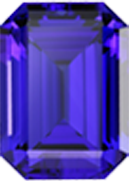
Tanzanite is the purplish blue variety of the mineral zoisite. A relatively recent addition to the world of gemstones, it was discovered in 1967 in the Merelani hills in northern Tanzania near Mt. Kilimanjaro. Merelani is still the only known source of gem grade tanzanite. Top specimens rival the finest royal blue sapphires in appearance. At 6-7 on the mohs scale tanzanite is softer than sapphire and best suited for pendants, earrings and occasional-use rings. Learn more about Tanzanite, a beautiful and exotic gemstone. |
 |
Tsavorite
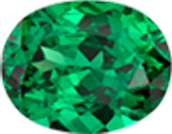
Tsavorite is the intensely green colored variety of grossular garnet. That’s right, a green garnet! Discovered in the Tsavo game preserve in Kenya, tsavorite is exotic and rare. In gem quality tsavorite can rival the appearance of fine emerald, and often has much better clarity and brilliance. The color of tsavorite can vary from lighter yellowish green to deeper bluish green, the color of fine emerald. With hardness in the 6.5-7.5 range on the mohs scale, tsavorite has good durability. Learn more about tsavorite and the multicolored world of Garnets. |
 |
Morganite
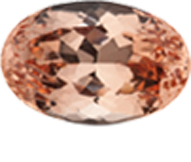
Morganite is the pink to orangey pink variety of the mineral beryl. It is part of the family of gems which includes aquamarine, heliodor and most famously, emerald. Like aquamarine, morganite is usually pale in color. To exhibit nice color larger sizes are required. Morganite’s color range includes pink, rose, peach, and salmon. With a hardness of 7.5-8 on the mohs scale, it has good durability. Morganite was named after the famous financier J.P. Morgan. Learn more about Morganite. |
 |
Moonstone
Moonstone is a variety of the mineral feldspar. A property called adularescence gives moonstone a unique billowy glow putting moonstone into the category of “phenomenal” stones along with opal and alexandrite. Colors range from white, to gray, to green and peach. The most highly prized gems are very transparent with blue flash adularescence. With a hardness of 6-6.5 on the mohs scale, moonstone is best used in pendants and earrings or rings that are worn occasionally. Learn more about Moonstone, a June birthstone. |
 |
Opal
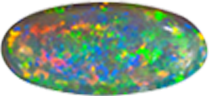
Precious opal is a variety of the mineral hydrated silica. Opal is highly prized for its optical effect called “play of color”. This is caused by a structure containing layers of microscopic spheres of silica which refract as they interact with light. Opal is found in several places in the world, the most famous of which is the Australian outback. It is also mined in Brazil and Mexico. It occurs in various color including white, black, orange and red. With a hardness of 5-6.5 opal is durable but should be handled with care. Learn more about the amazing gemstone Opal. |
 |
Turquoise
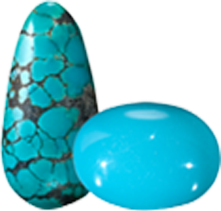
Turquoise is a blue to blue-green opaque to semi-translucent gem that is normally cut in cabochon form. It was highly prized by both the Egyptians and the indigenous peoples of the Americas. Turquoise was used in some of the world’s oldest jewelry with Egyptian artifacts dating back to 4000 BC. The most prized turquoise is an even, intense, medium blue. But many fine specimens contain interesting inclusions referred to as matrix which adds visual interest and appeal. Learn more about Turquoise, a birthstone for December. |
 |
Kunzite
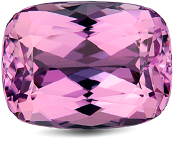
The pink variety of the mineral spodumene is called Kunzite. It ranges in color from light pink to violetish purple. Named after pioneering gemologist George Frederick Kunz, the gem is found in Afghanistan, Brazil, Madagascar and also in the US (California). The color is usually very pale and large sizes are required to exhibit the best color. It is important to know that he color of Kunzite can fade with exposure to heat or strong sunlight, and therefore should be worn only indoors. Learn more about Kunzite. |
 |
Peridot
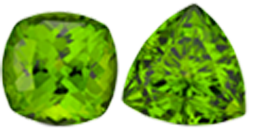
Peridot is the gem variety of the mineral olivine. It is a yellow green color, sometimes having a brown component. The finest gems are pure grass green with no hint of yellow or brown. With a hardness of 6.5-7 peridot has good durability. In addition to being found in conjunction with volcanic areas on earth, peridot has been found in meteorites, with some crystals even big enough to cut a faceted gem! The largest and finest Peridots traditionally have come from Burma. In the US peridots are mined Learn more about Peridot, the birthstone of August. |
 |
Spinel
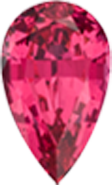
Spinel is a gemstone that occurs in a range of colors including red, pink, purple and blue. Intense red spinels are easily mistaken for fine rubies. In fact, some of the world’s most important “rubies” such as the 14th century gem in the British Imperial Crown was discovered to in fact be a spinel. Red is the most sought after color, followed by intense blue and hot pink. With a hardness of 8 on the mohs scale, spinel has very good durability. Learn more about Spinel, the great imposter. |
 |
Zircon
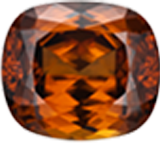
Zircon, not to be confused with cubic zirconia, is a fascinating natural gem that comes in an array of colors including blue, red, yellow, orange, brown and green. Colorless zircon has been confused with diamond due to its high capacity for brilliance and fire. Zircon found in Australia is the oldest mineral on earth, some 4.4 billion years old! Zircon also sometimes contains traces of uranium, irradiating itself and changing its properties. With hardness of 6-7.5 zircon has good durability Learn more about the interesting gem Zircon. |
 |
Lapis Lazuli
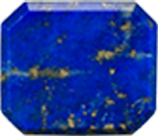
Lapis is a beautiful blue rock composed of several minerals; mainly lazurite, calcite and pyrite. It is an opaque material that is cut in cabochon or polished flat and used as inlay. The finest gems are pure saturated royal blue, but most have bits of calcite and/or pyrite that add visual interest and appeal. Lapis is popular in bead form and carved as objects d’art. The main sources of lapis are Afghanistan is considered the source of the highest quality lapis, but it is also found in Russia and Chile. Learn more about Lapis Lazuli. |
 |
Iolite
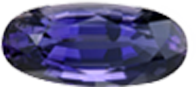
Iolite is a blue to violet gem also known to mineralogists by the name cordierite. Iolite has been called “water sapphire” although it is not a sapphire at all. It is strongly pleochroic, having vastly different colors when viewed through different axes. It can be deep blue in one direction and pale yellow to colorless in another. If oriented correctly when cut iolite can produce a beautiful blue faceted gem. With a hardness of 7-7.5 iolite had good durability. Learn more about the interesting blue gem Iolite. |